
Does Cannabis Shrink Your Brain?
A viral claim turns cannabis brain research into a one-line shrinkage scare. The evidence is messier: blood flow, activation, volume, cognition, age, dose, and heavy-use patterns are not interchangeable.
Topics
On this page
Cannabis brain claims are perfect internet fuel because both sides already know what they want the answer to be. One side wants weed is harmless. The other wants weed melts your brain. The evidence does not fit either slogan. The better question is not whether marijuana shrinks your brain. It is what kind of cannabis use, in whom, at what age, how often, at what potency, with what co-use, and measured by which endpoint: blood flow, fMRI activation, structural volume, cognition, dependence, or acute intoxication.
Viral Vitalism Evaluation Matrix v1.0
High-sensitivity public brain-health claimCannabis brain-shrinkage claim scorecard
The risk signal is real enough to discuss, but the viral claim compresses distinct endpoints into a scarier structural-brain slogan.
VV Signal Score
58/100
Early or context-dependent
Plain-English verdict
Cannabis is not brain-health confetti, but 'marijuana shrinks your brain' is too sloppy to be the evidence summary.
Higher means more burden.
Higher means more burden.
Higher means more burden.
Higher means more burden.
Higher means more burden.
Who it may fit
- Readers trying to understand cannabis brain claims.
- People separating heavy-use risk from casual-use slogans.
- Clinician-adjacent readers tracking public claim distortion.
Who should be careful
- Adolescents and young adults.
- People with psychosis or bipolar risk.
- People with cannabis use disorder symptoms.
- People considering ketamine outside qualified medical care.
Fit caveat
This is public-claim evaluation, not personal medical advice or a cannabis-use recommendation.
Publication gate
Asprey X/Facebook posts are public-discourse sources only.
Amen/SPECT supports hippocampal hypoperfusion / perfusion framing, not structural shrinkage.
Avoid endpoint swaps and causality overclaims.
Medical gate: Cannabis, cognition, psychiatric vulnerability, substance use, and ketamine safety are high-sensitivity consumer-health topics.
Evidence gate: Much of the evidence is observational and endpoint-specific.
Bias gate: Public discourse is highly identity-loaded and influencer-framed.
How a brain signal becomes a viral overclaim
- 01
Public claim
A screenshot compresses cannabis brain research into a shrinkage slogan.
- 02
Endpoint-specific finding
A study measures blood flow, task activation, brain volume, cognition, or behavior.
- 03
Endpoint swap
Blood flow or activation becomes structural brain shrinkage in public translation.
- 04
Identity fight
Cannabis defenders and anti-cannabis readers react from opposite priors.
- 05
VV boundary
Keep the real risk signal, but reject the evidence compression and ketamine substitution leap.
This is a public-claim map, not a personalized cannabis risk assessment.
Viral Vitalism
Key takeaways
- The viral shrinkage claim compresses distinct endpoints: blood flow, fMRI activation, structural volume, cognition, and behavior.
- Heavy lifetime cannabis use has been associated with lower working-memory task activation in young-adult fMRI data, but that is not the same as whole-brain shrinkage.
- Structural brain-volume findings are mixed and context-sensitive, especially across age, age at first use, potency, frequency, co-use, and study design.
- An older-adult UK Biobank counter-signal breaks the simple meme, but it does not prove cannabis protects the aging brain.
- The ketamine pivot needs a safety boundary: supervised medical use is not the same as a casual relaxation recommendation.
The viral claim gets one thing right and one big thing wrong
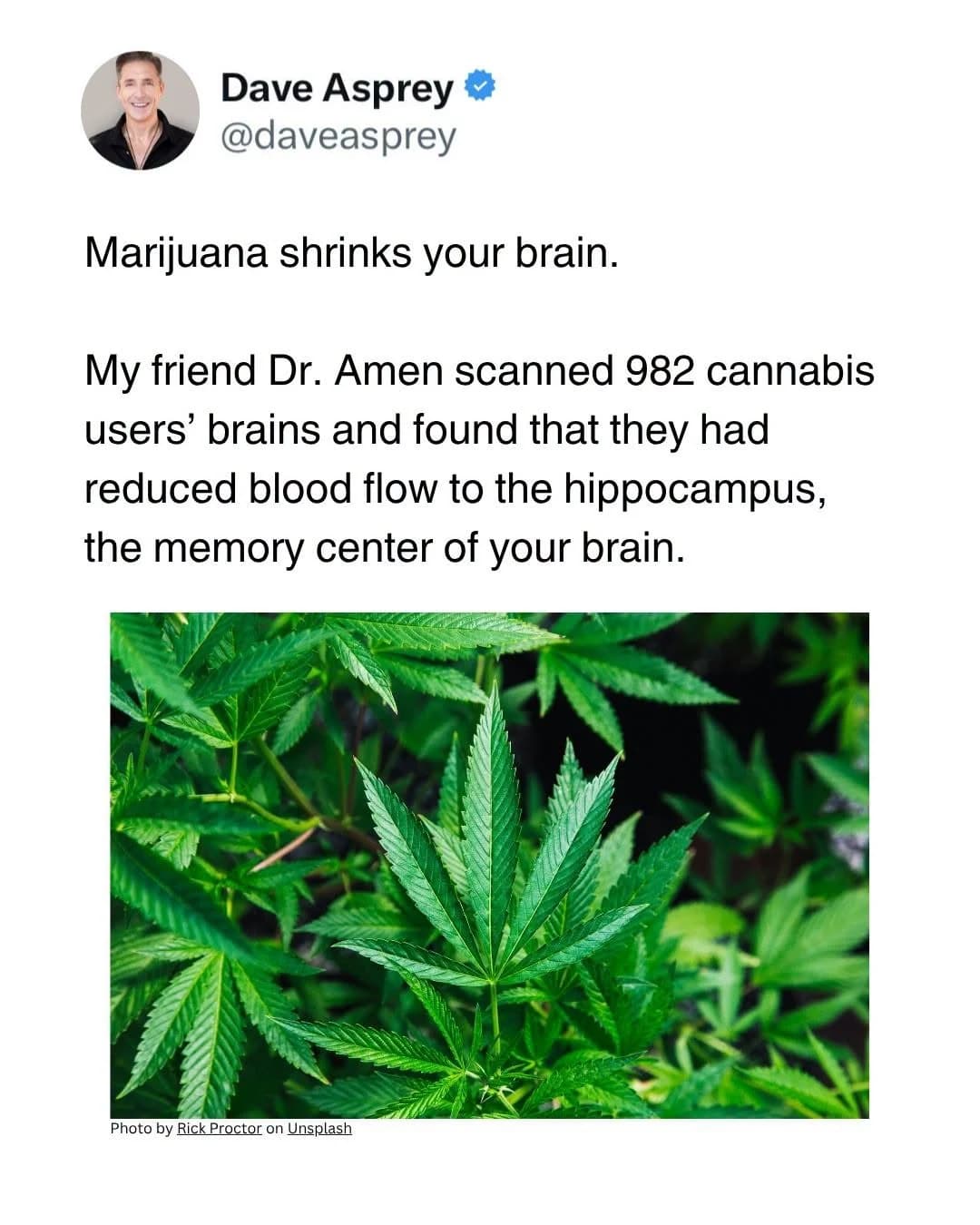
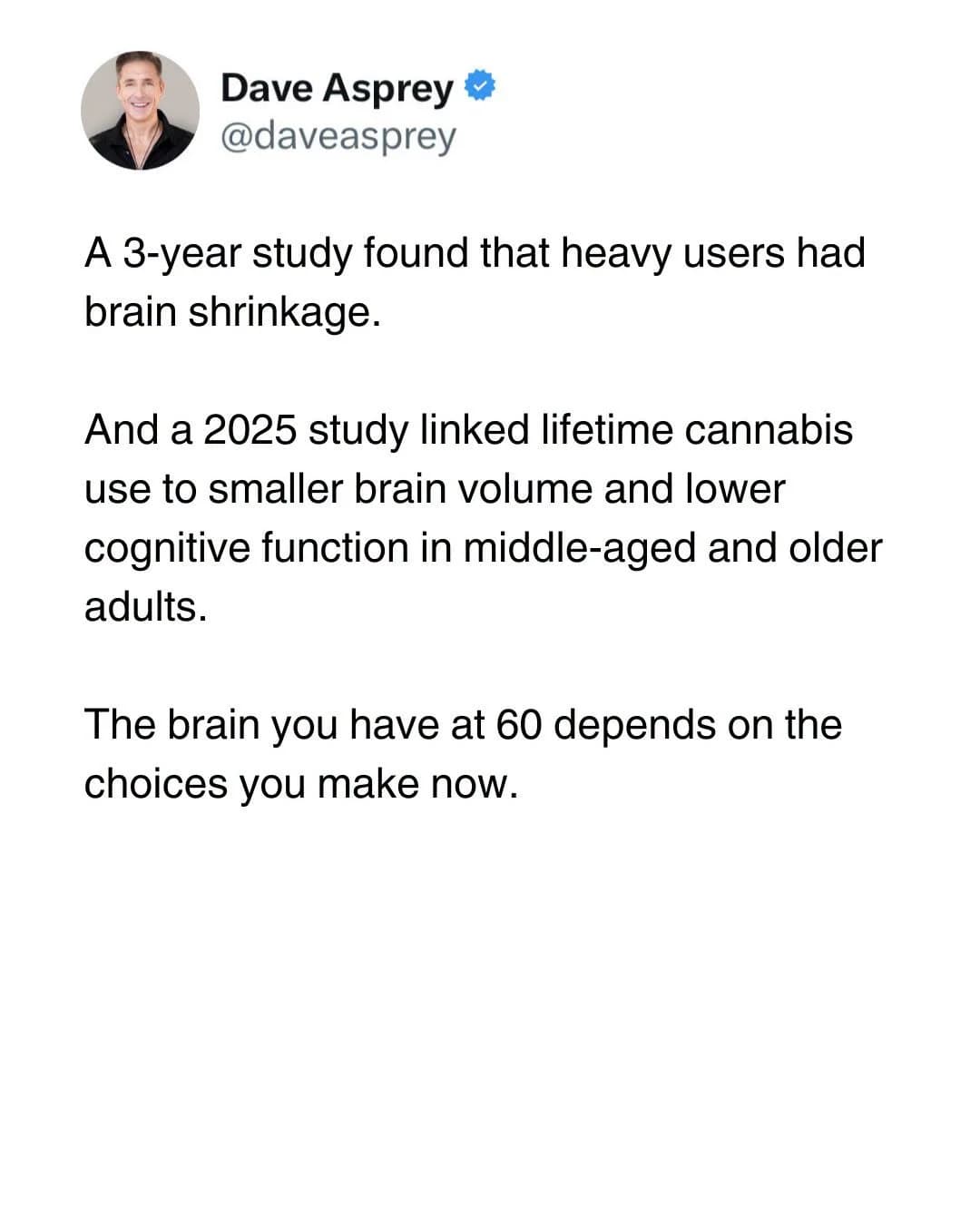
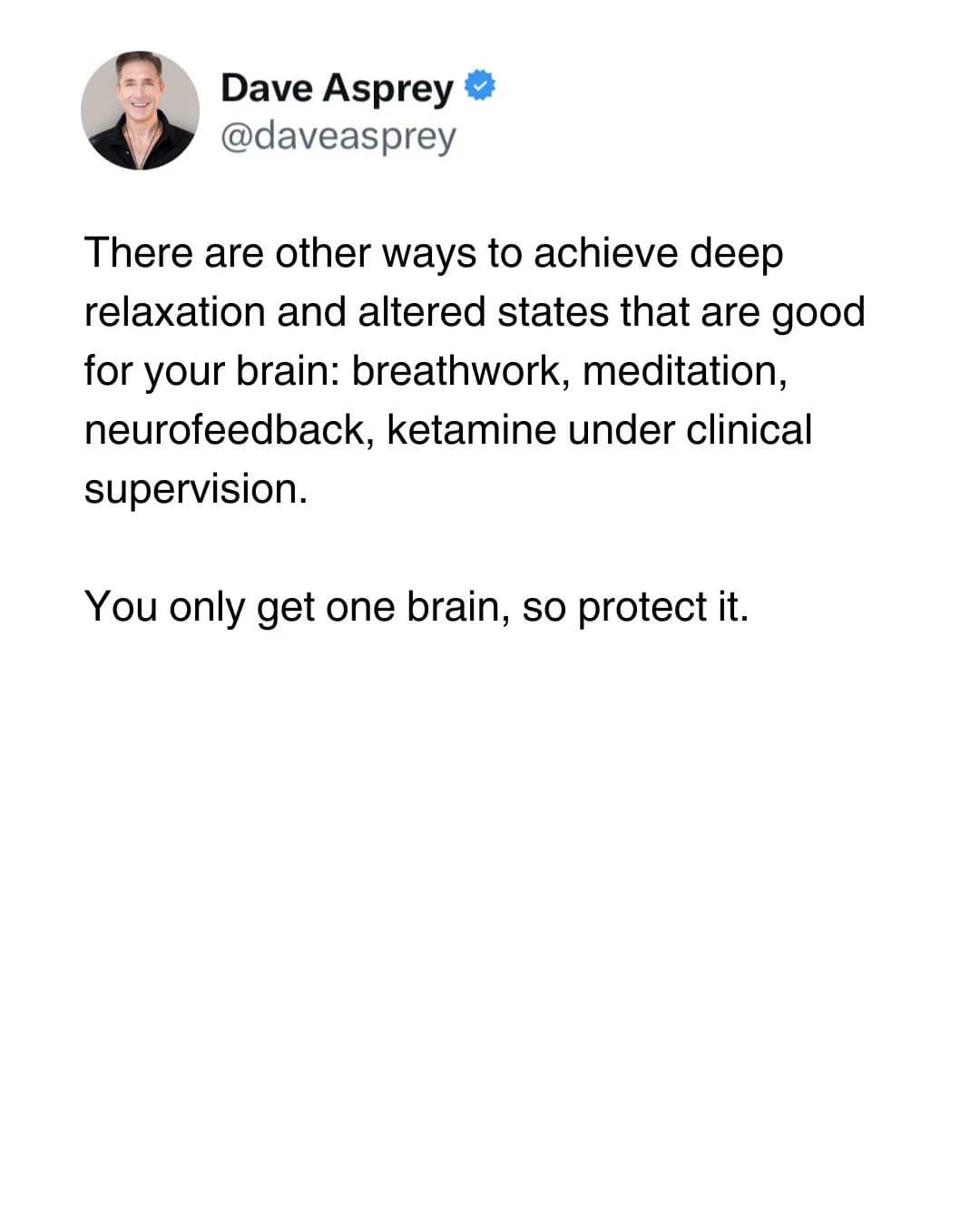
The attached post sequence works because it is emotionally efficient: marijuana shrinks your brain, a scan authority said the hippocampus has reduced blood flow, heavy users had shrinkage, and ketamine belongs in the alternatives list.
The part it gets right is that cannabis is not biologically inert. Heavy, persistent, early-life, high-THC, or dependent use can be associated with cognition, working memory, psychiatric vulnerability, and measurable neuroimaging differences.
The part it gets wrong is the endpoint swap. Blood flow is not brain volume. fMRI activation is not shrinkage. Memory performance is not a scan. A correlation in one subgroup is not a universal biological destiny.[1][2][3][9][8]
Blood flow, activation, volume, and memory are not the same claim
A brain-health claim has to say what was actually measured. A SPECT or perfusion scan asks about blood flow. An fMRI working-memory task asks which regions activate while someone performs a task. A structural MRI volume analysis asks about the size or volume of regions. A cognitive test asks how someone performs. Those are related, but they are not interchangeable. The moment a blood-flow or task-activation finding becomes brain shrinkage, the claim has left the study and entered the algorithm.[3][4][7]
What the evidence is actually measuring
SPECT perfusion
Endpoint-specific
What we know
Can speak to blood-flow patterns in a studied imaging context.
Still unclear
Does not directly prove structural volume loss or clinical destiny.
fMRI working-memory activation
Observational signal
What we know
Heavy lifetime use was associated with lower activation during a working-memory task.
Still unclear
Cross-sectional activation differences are not whole-brain shrinkage.
Structural brain volume
Mixed observational evidence
What we know
Volume findings vary by population and exposure pattern.
Still unclear
Causality and individual meaning remain uncertain.
Viral Vitalism
The strongest recent negative signal is working memory in heavy young-adult users
The JAMA Network Open study is the cleanest mainstream hook for the anti-cannabis side, but it still does not say what the viral claim says. The study analyzed young adults and reported that heavy lifetime cannabis use was associated with lower activation during a working-memory task. That is a real concern. It is also not a license to say every cannabis user is shrinking their hippocampus. The more accurate public version is narrower: heavy lifetime cannabis use in young adults is associated with lower working-memory activation in cross-sectional fMRI data.[3]
Structural brain volume is not a single settled story
Some long-term cannabis research has reported smaller regional volumes or cognitive differences in heavier or more persistent users, especially where use begins earlier and continues through key developmental windows. But structural brain research is not simple. Results vary by age at first use, frequency, dependence, recency, potency, tobacco and alcohol co-use, psychiatric context, education, baseline differences, and measurement method. Even when a study finds a smaller regional volume, the next question is not weed shrinks your brain. It is which region, what population, what exposure pattern, what comparison group, what confounders, and what functional meaning.[6][4][5]
The older-adult counter-signal breaks the meme
A UK Biobank analysis of middle-aged and older adults reported that lifetime cannabis use was associated with larger regional brain volumes in several CB1-rich areas, including the hippocampus, amygdala, caudate, and putamen, along with better performance on some cognitive tasks. This does not prove cannabis protects the aging brain. It is observational, self-reported, and vulnerable to healthy-user bias, selection effects, survival effects, product differences, and confounding. But it breaks the cartoon claim. If marijuana shrinks your brain were the responsible evidence summary, this counter-signal should not exist.[4][5]
Vital Signals
Get the weekly health signal without the wellness fog.
A clean weekly brief covering longevity science, fitness, nutrition, medicine, health culture, and the claims worth questioning.
No spam. No selling your information. Unsubscribe anytime.
By subscribing, you agree to receive email from Viral Vitalism. Unsubscribe anytime. See our Privacy Policy.
Perfusion is not shrinkage
The source behind the Amen claim is a SPECT perfusion study. That matters because perfusion is blood-flow signaling, not structural brain volume. The study can support a bounded claim about hippocampal hypoperfusion in the cited marijuana-user sample, but it cannot carry the viral claim that marijuana literally shrinks your brain. This is the exact claim-compression failure: a technical imaging finding gets translated into a scarier, simpler, more viral claim.[7]
Why this claim wins online
The cannabis brain-shrinkage claim is built for engagement because it splits the audience instantly. Cannabis defenders see fearmongering. Anti-cannabis readers see vindication. Biohacking audiences see a brain-scan authority cue. Wellness audiences see a protocol pivot. Everyone gets something to fight about. The correct VV posture is not weed good or weed bad. It is: the risk signal is real enough to discuss, and the viral claim is too sloppy to trust.[1][2]
The ketamine pivot needs its own warning label
The most absurd part of the public claim is not only the cannabis framing. It is the pivot from protect your brain to recommending ketamine as an alternative route to relaxation or altered states. Ketamine is not a wellness incense stick. FDA says ketamine is not approved for any psychiatric disorder, compounded ketamine products are not FDA-approved for safety, effectiveness, or quality, and known concerns include sedation, dissociation, abuse and misuse, psychiatric events, blood pressure increases, respiratory depression, and urinary/bladder symptoms. So the public translation becomes almost too perfect: cannabis shrinks your brain, anyway have you considered medically supervised dissociative anesthesia?[1][2][10]
The better question is not 'does weed shrink your brain?'
The better question is a decision tree. Who is using it? How old were they when they started? How often are they using it? How much THC? Is it daily? Is it a high-potency concentrate? Is there dependence or withdrawal? Are they using before work, school, driving, or training? Are they also using alcohol, nicotine, stimulants, sleep meds, or psychedelics? Is there psychosis, bipolar disorder, panic, depression, or trauma history? Is the study measuring blood flow, activation, volume, or performance? The slogan says weed shrinks your brain. The evidence says context matters, endpoints matter, and heavy use deserves caution.[9][8][3]
What matters
Keep the real caution around heavy, frequent, early, high-THC, or dependent use, but reject endpoint swaps that turn every scan finding into brain shrinkage.
What is still uncertain
Causality, modern potency effects, age-at-initiation effects, product route, co-use, and long-term clinical meaning remain hard to separate in much of the evidence.
Better questions before sharing a cannabis brain claim
| Decision point | Potential upside | Caution | Consumer question |
|---|---|---|---|
| Age started | Separates adult occasional use from developmental exposure. | Adolescent and young-adult exposure can carry different brain-development concerns. | How old was the person when use became regular? |
| Frequency | Distinguishes occasional use from daily or dependent use. | Heavy and persistent patterns are the main risk signal in many studies. | Is this occasional, weekly, daily, or dependent use? |
| Endpoint | Prevents blood flow from being confused with brain volume. | A scan finding can be real but still mistranslated. | Was the study measuring blood flow, activation, volume, cognition, or symptoms? |
| Ketamine pivot | Keeps an alternative recommendation from sneaking in without scrutiny. | Ketamine carries medical supervision and safety concerns. | Is this being presented as a casual relaxation alternative? |
Viral Vitalism
Practical takeaway
Do not turn cannabis risk into propaganda, and do not turn cannabis normalization into denial. Heavy, frequent, early, high-THC, or dependent use has enough brain and cognition signal to take seriously. But marijuana shrinks your brain is not a responsible summary of the evidence. The more accurate claim is narrower, less viral, and more useful: cannabis brain effects depend on exposure pattern, age, potency, recency, endpoint, and individual vulnerability.
FAQ
Does cannabis literally shrink the whole brain?
No strong evidence supports that as a universal claim. Some studies report regional structural, functional, or perfusion differences in certain users, especially heavy or persistent users, but the evidence should not be compressed into a whole-brain shrinkage slogan.[3][4][6]
Is cannabis harmless?
No. Cannabis can impair memory, attention, reaction time, and judgment, and heavier, earlier, or dependent use can carry higher risk. The point is not that cannabis is safe. The point is that the viral claim is too blunt.[9][8]
What about the hippocampus?
The hippocampus matters because it is involved in memory and cannabinoid signaling. But a hippocampal blood-flow, activation, or volume finding has to be described by its actual measurement and study design.[7][6][4]
Is ketamine a better relaxation alternative?
Not as a casual public recommendation. FDA warns about meaningful risks around compounded ketamine, and supervised esketamine use has monitoring requirements. Any ketamine-related care belongs in a qualified medical setting, not an influencer substitution funnel.[10]
Independent health signal tracking
This work is reader-supported.
If this helped you see the signal more clearly, support Viral Vitalism's independent health desk.
Support the SignalSources and further reading
Research map
View associated studies
Primary studies and guidance records behind this Signal.
AHA marijuana brain health
Use of Marijuana: Effect on Brain Health
Clinical guidance from 2022 in Stroke, translated into key findings, limitations, and consumer relevance.
Why this appears: Explicitly linked as a study used by this page.
Stroke / 2022->
Amen marijuana SPECT perfusion
Discriminative Properties of Hippocampal Hypoperfusion in Marijuana Users Compared to Healthy Controls: Implications for Marijuana Administration in Alzheimer's Disease
Observational study from 2016 in Journal of Alzheimer's Disease, translated into key findings, limitations, and consumer relevance.
Why this appears: Explicitly linked as a study used by this page.
Journal of Alzheimer's Disease / 2016->
Dunedin long-term cannabis
Long-Term Cannabis Use and Cognitive Reserves and Hippocampal Volume in Midlife
Observational study from 2022 in American Journal of Psychiatry, translated into key findings, limitations, and consumer relevance.
Why this appears: Explicitly linked as a study used by this page.
American Journal of Psychiatry / 2022->
FDA compounded ketamine warning
FDA warns patients and health care providers about potential risks associated with compounded ketamine products
Government safety page from 2023 in U.S. Food and Drug Administration, translated into key findings, limitations, and consumer relevance.
Why this appears: Explicitly linked as a study used by this page.
U.S. Food and Drug Administration / 2023->
Gowin cannabis fMRI
Brain Function Outcomes of Recent and Lifetime Cannabis Use
Observational study from 2025 in JAMA Network Open, translated into key findings, limitations, and consumer relevance.
Why this appears: Explicitly linked as a study used by this page.
JAMA Network Open / 2025->
Guha cannabis aging brain
Lifetime Cannabis Use Is Associated with Brain Volume and Cognitive Function in Middle-Aged and Older Adults
Observational study from 2025 in Journal of Studies on Alcohol and Drugs, translated into key findings, limitations, and consumer relevance.
Why this appears: Explicitly linked as a study used by this page.
Journal of Studies on Alcohol and Drugs / 2025->
NIDA cannabis brain context
What are marijuana's long-term effects on the brain?
Government safety page from 2024 in National Institute on Drug Abuse, translated into key findings, limitations, and consumer relevance.
Why this appears: Explicitly linked as a study used by this page.
National Institute on Drug Abuse / 2024->
Claim ledger
Relevant claims
Claim ledger records connected through this article's topics, sources, studies, or scoring model.
cannabis: The broad claim that cannabis shrinks your brain overstates
The broad claim that cannabis shrinks your brain overstates a mixed evidence base and swaps endpoints such as perfusion, activation, volume, and cognition.
cannabis: Cannabis brain and cognition risk depends heavily on age,
Cannabis brain and cognition risk depends heavily on age, frequency, potency, recency, route, dependence, vulnerability, and co-use.
cannabis: Cannabis brain-volume evidence varies by population, exposure pattern, age
Cannabis brain-volume evidence varies by population, exposure pattern, age at first use, co-use, measurement method, and confounding.
cannabis: Older-adult cannabis brain-volume counter-signals break the simple shrinkage meme
Older-adult cannabis brain-volume counter-signals break the simple shrinkage meme but do not prove cannabis protects the aging brain.
brain imaging: A SPECT perfusion or blood-flow finding should not be
A SPECT perfusion or blood-flow finding should not be described as proof of structural brain shrinkage.
cannabis: Heavy lifetime cannabis use has been associated with lower
Heavy lifetime cannabis use has been associated with lower working-memory task activation in young-adult fMRI data.
Reader challenge
Argue the Signal
Think this article missed something? Tell us where the signal is wrong, too soft, too harsh, or missing a source. Strong opinions are welcome. Receipts move the review queue.
Submissions go to an internal editorial queue. They help us improve sources, counterpoints, and future updates. This is not personal medical advice, and submissions do not automatically change canonical claim evaluations.
Medical disclaimer
Viral Vitalism is for education and commentary only. This is not medical advice, diagnosis, or treatment. Talk with a qualified clinician before changing medications, supplements, training, diet, or treatment plans.